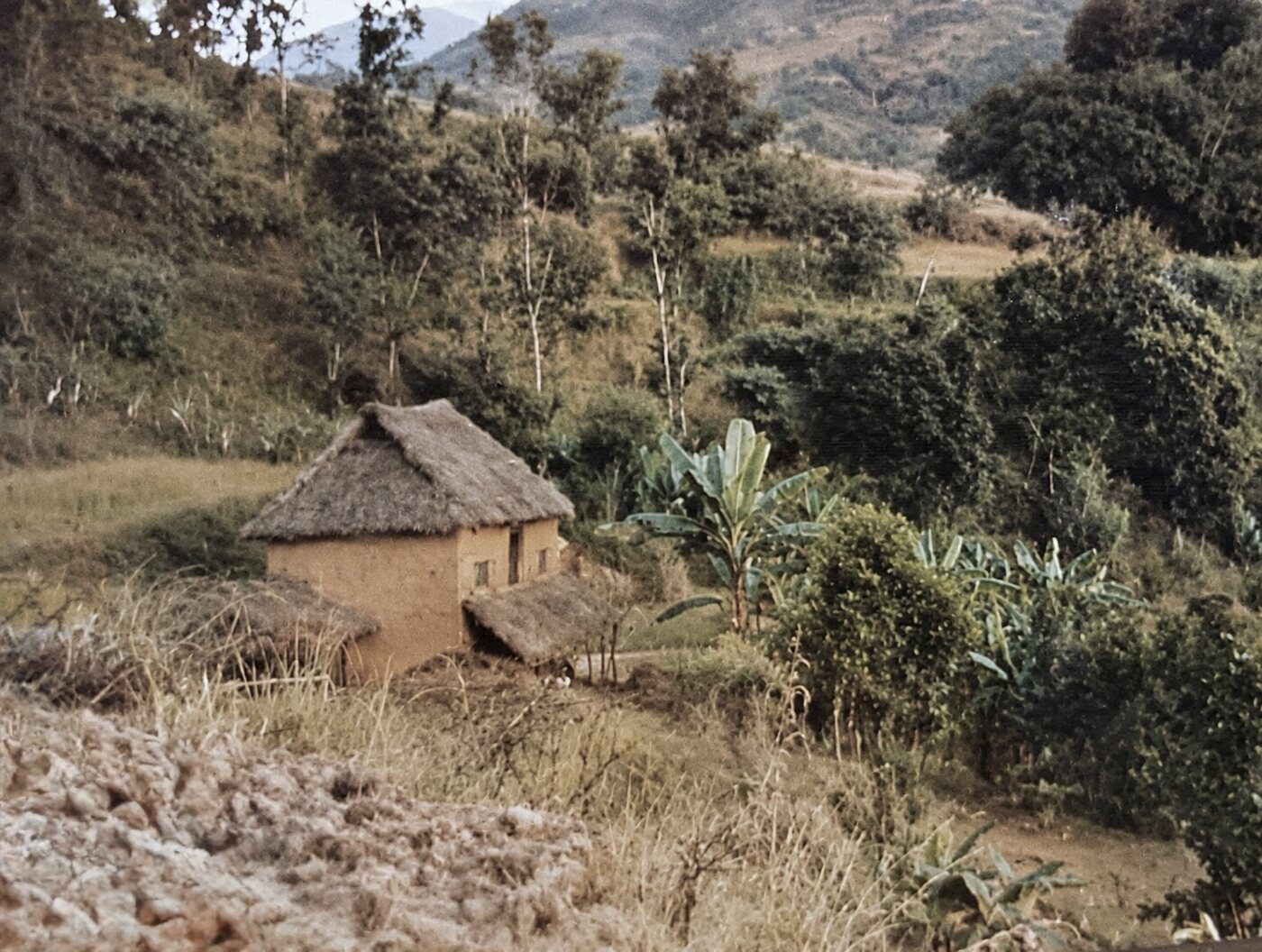
Our family's journey began far to the west, in the village of Regmi in Bajhang district. Generations ago, our ancestors migrated east — first toward Kathmandu and Dhading, then settling in Belkot, Nuwakot, where the family deity was established. The land at Madanpur has been under our family's care for nearly two hundred years.
The elders remember a different world. As a schoolboy, our father would set out from the village house before dawn, lantern in hand, walking with porters carrying supplies — reaching the family home in Lainchaur, Kathmandu only by lantern light that evening. There were no roads then, no schools, no electricity in the village. Water came from the pandhero — the stone spring — which the farm still keeps as its backup source today.
The Captain plants an orchard
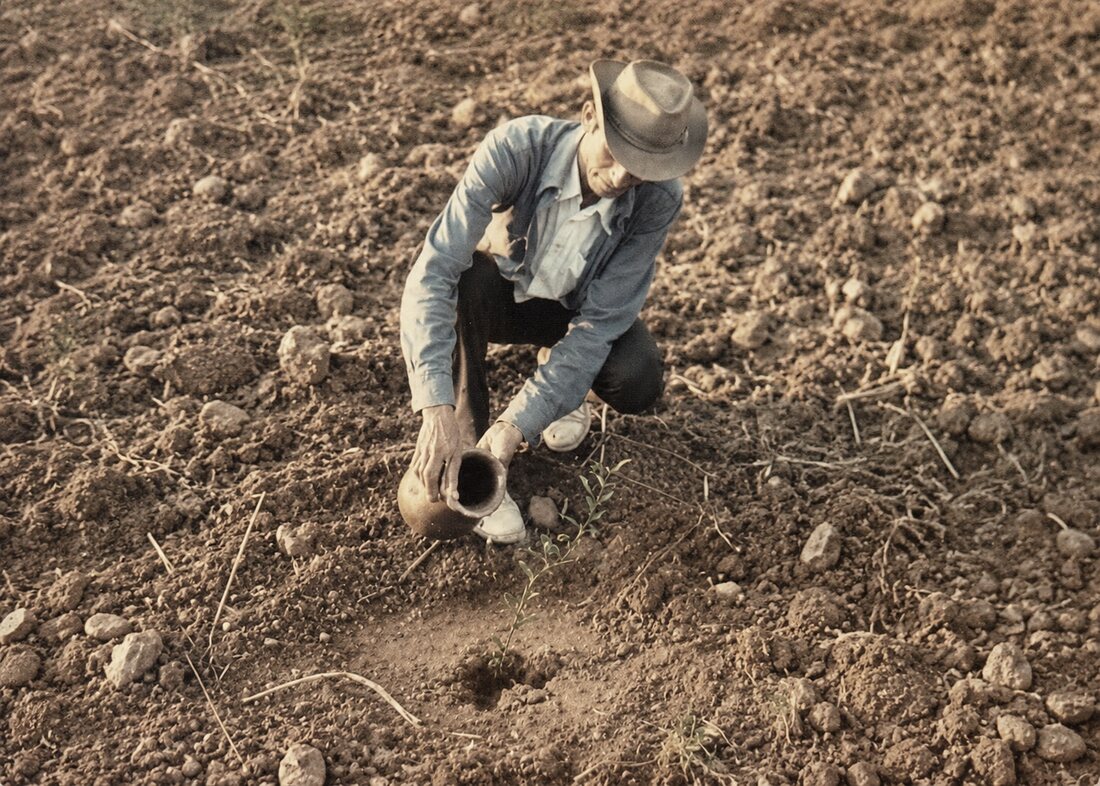
In the 1970s, His Majesty King Birendra's government called on hill families to take up fruit farming, alongside a nationwide soil conservation campaign. It struck close to home: the western slope of our land was scarred by landslides, sliding season after season.
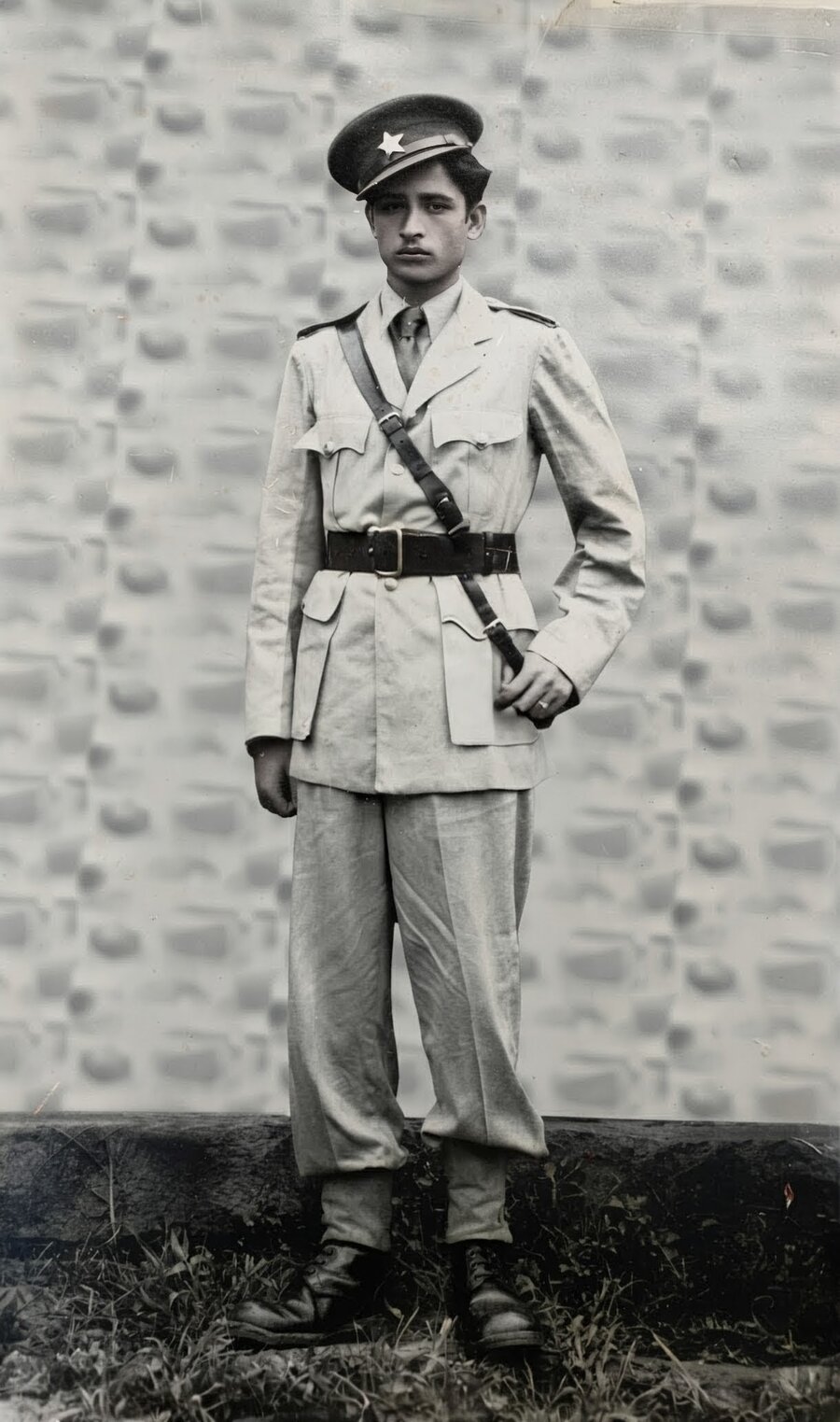
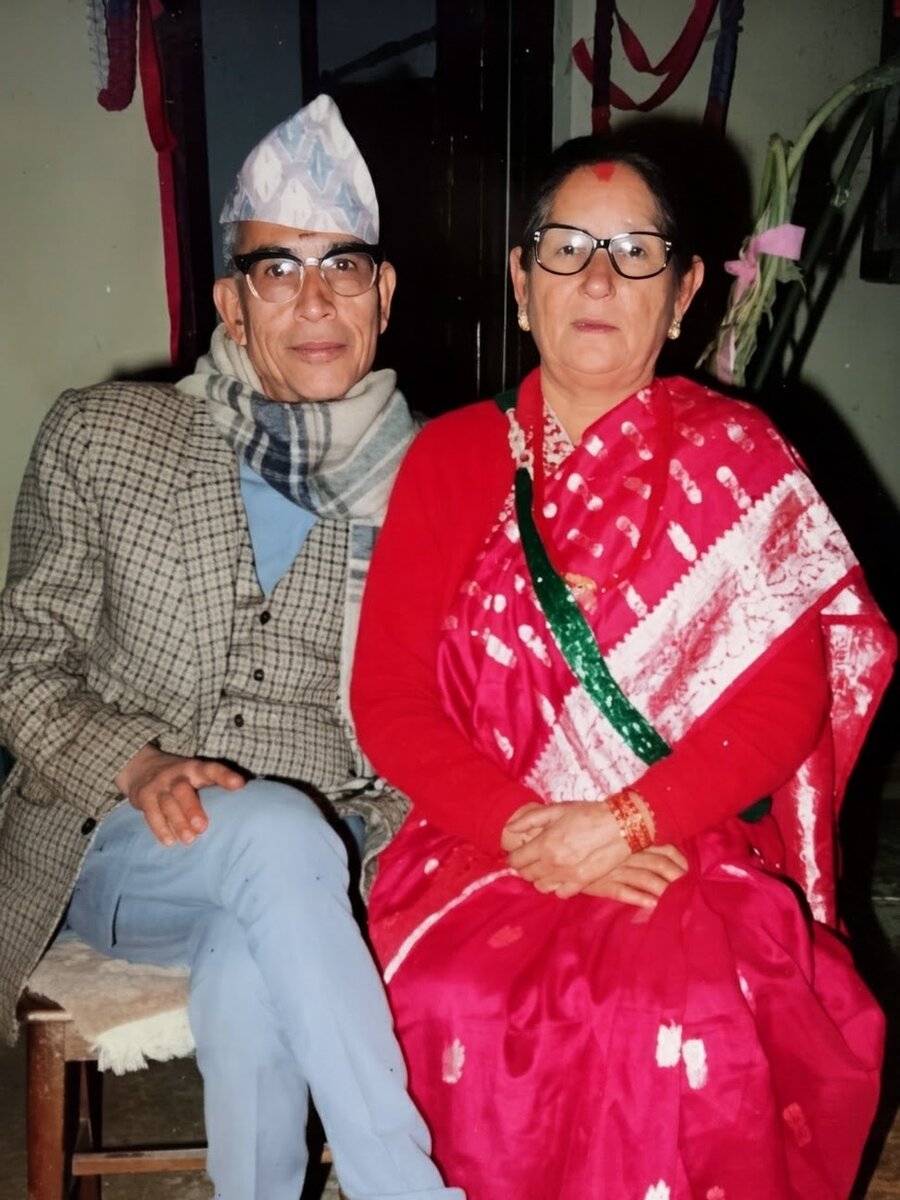
After family deliberation, Captain Prem Bahadur Regmi (1922–2014) of the Nepal Army — our father — led the planting. From government nurseries came saplings of ten kinds: mango, lychee, banana, papaya, lemon, macadamia, avocado, and more. It was farming with two purposes — livelihood for the family and roots for the hillside itself.
He was not alone. Our mother, Mana Kumari Regmi (1929–2006), family members and neighbours, teachers and local elders of Madanpur and Deurali, and horticulture officers all lent hands, saplings, and baskets of manure. The whole community planted this farm.
Fruit at the bus stop
The trees bore fruit — but without roads, getting the harvest to market was its own adventure. Fruit was carried to Kathmandu and sold from the family home, delivered to nearby hotels, and — after office hours and on days off — sold personally at the Ratna Park bus stop. Colleagues who spotted a serving army officer selling lychees at the bus park laughed at first. Then they became customers.
"The Kathmandu house is honor and education — it lets you serve honestly, without corruption. But the Madanpur land is what sustains us. Both matter."
— The Captain, as remembered by his familyDuty kept the family in Kathmandu and other districts for long stretches, and the farm could not always get the care it deserved. After our parents' passing and years of political upheaval in the country, the farm's condition grew fragile. But one quiet triumph endured: because the land had been fenced and protected, the trees — fruit and forest alike — kept regenerating. Erosion halted. The entire hillside turned green, a change so complete you can see it from space on satellite imagery.
The revival
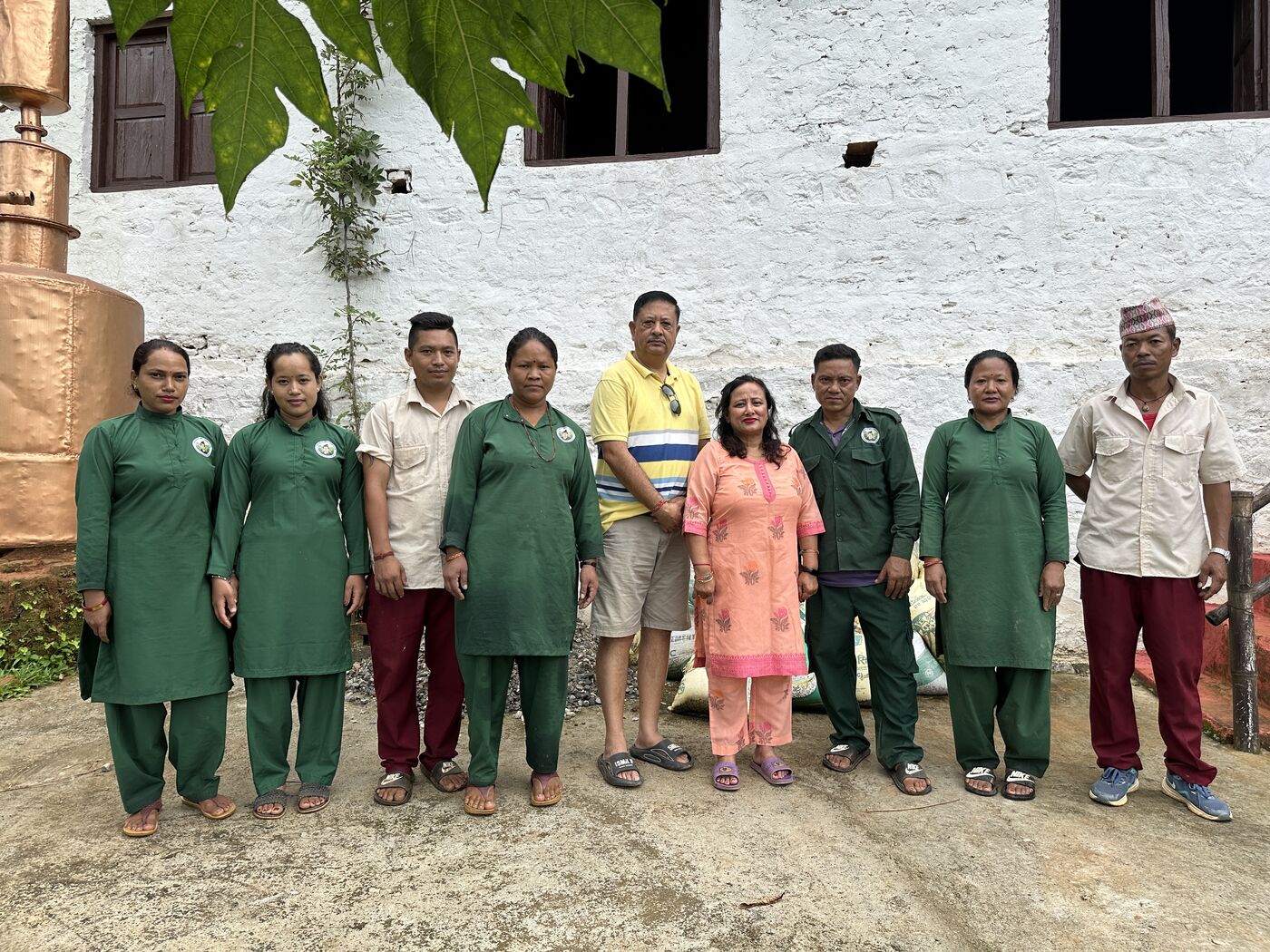
We had never forgotten our parents' worry: "You will all live in the city — what will become of this farm after we are gone?" Around 2020, the family resolved to continue what they had started. Under the leadership of Nirakar and Mana Regmi, and with the management of two energetic young partners from Kathmandu — Subash Gautam and Nischal Narsingh Rana — Captain Regmi's Farmhouse came back to life, with early groundwork from technical officer Arun Bist and local advisor Ratna Bahadur.
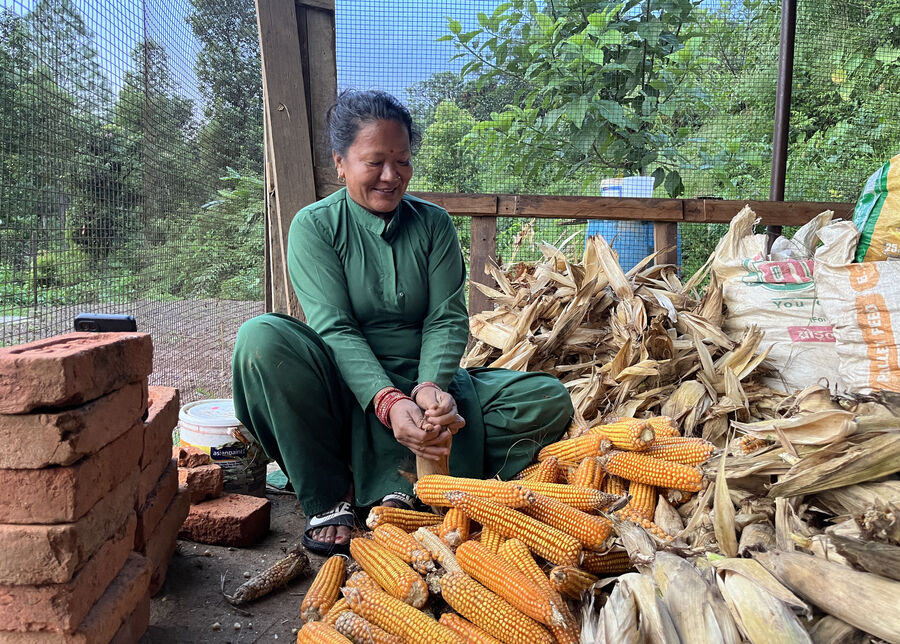
COVID-19 slowed the first seasons, but the direction held: keep the farm alive by keeping it in environmental balance — orchards and forest, animals and gardens, and a farmhouse whose doors are open once more.